 BoBMarvan.com
End-to-End Design Discovery

A systematic exploration of user and business needs before investing in development.

Why you need Discovery
Major digital initiatives most often fail not because of technology, but because user and market needs have been misunderstood. Discovery is a safeguard against costly mistakes—it helps you identify what creates real value before you invest in development.
- Reduces risk – validate hypotheses before investing in development.
- Speeds up decision-making – use evidence instead of relying on leadership intuition alone.
- Aligns the team – ensure everyone understands the same needs and business goals.
- Shortens time to market – prioritise features and directions clearly.
- Increases adoption – build things that address real needs, not assumptions.
Why work with me
Discovery is not a workshop. Nor is it simply the first phase of UX.
I have worked with Discovery as a standalone discipline for close to 10 years. Not occasionally between design and development, but as the core focus of my work.
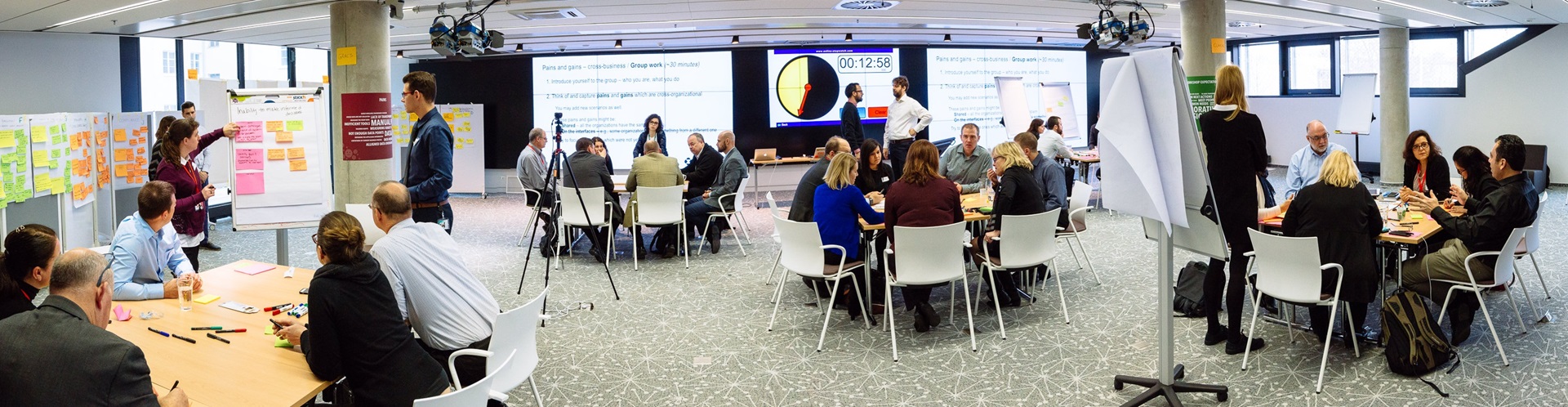
I am used to working in complex setups: across several teams at once, with dozens of stakeholders, in workshops involving 10–15 people, and through sequences of connected workshops that lead to decisions—not just notes on a wall.
My goal is not simply to “run Discovery”. My goal is for the organisation to understand the problem and agree on what to do next.

Who it is for
- Product and Digital leadership: CPOs, Heads of Digital and Product Directors
- Innovation managers and teams looking for new opportunities
- Programme and Transformation owners who need a clear direction and decision
Discovery is particularly valuable in organisations where several roles and teams need to agree on the outcome (product, business, IT, marketing, operations, compliance and others).
What the service includes
Research & context
- Desk research: competitors, trends, regulation
and internal context - Stakeholder interviews and goal alignment
- User interviews, typically 5–10 depending on scope
Analysis & decision-making
- Synthesis of insights: what the real problem is and why
- Framing hypotheses and opportunities
- Prioritisation: impact × effort × risk
Validating the direction
- Low-fidelity prototypes and concepts
- Rapid validation with users through testing and experiments
Facilitation and team collaboration
- Discovery workshops, including larger groups of 10–15 people
- Sequences of workshops and connected decisions over time
- Final alignment: what to do now, later and not at all

How it works
A typical engagement takes 4–6 weeks, depending on scope and people's availability. We always begin by aligning on the challenge and finish with concrete outputs for the next phase.
- Preparation – goals, scope, risks and plan.
- Research – users, stakeholders and data.
- Synthesis – problems, insights, opportunities and hypotheses.
- Ideation – ideas and prototypes.
- Validation – rapid tests and experiments.
- Recommendation – prioritisation and a plan for the next steps.
What you get
- Research & insights report covering user needs, barriers, motivations and context
- Opportunity backlog with prioritised opportunities and recommendations
- Validated hypotheses and proposed experiments: what to test and how
- Concepts or low-fidelity prototypes, where useful, with feedback from testing
- Decisions and next steps – what to do now, later and not at all
Examples of similar work
Direct family — Fidoo FX: The future of an online foreign exchange service (2024)
Situation: Defining a future direction from an ambiguous brief.
What we did: An end-to-end design discovery: 15 in-depth interviews with CFOs, CEOs and senior accountants from Czech companies of different sizes, followed by synthesis and a series of ideation workshops.
Outputs: Three potential value propositions, a prototype of the first one and final qualitative user testing.
Decision / impact: Testing confirmed that reframing the original brief in the chosen direction was appropriate. Quantitative validation was postponed in favour of further research following a management decision.

Gen — Avast Secure Browser: Side Panel with AI (2023)
Situation: Determining how to integrate the Side Panel into the browser and which features, beyond AI, would encourage active use.
What we did: Desk research supported by AI produced a long list of features; quantitative research narrowed it to a shortlist; we then designed three integration concepts and tested them with users.
Outputs: A recommended feature set, simplified information architecture and a direction for the MVP.
Decision / impact: After the MVP, testing showed that Side Panel discoverability improved from an estimated 6% to 40%.

MSD / PharmaLedger: Digitalisation of medicine leaflets (2020)
Situation: Preparing an MVP brief for digitising medicine leaflets for a European pilot in a multi-stakeholder environment.
What we did: A series of online workshops to map existing processes and pain points, design a new process and break it down into individual epics.
Outputs: An MVP brief and an epic-level structure for the pilot.
Decision / impact: Stakeholders stated that they would not have been able to deliver the MVP brief without our support.
Investment
- Fixed package: approximately CZK 150,000–300,000*, depending on scope and availability
- Time & material: CZK 2,400* / hour
- Typical duration: 4–6 weeks
- *) excluding VAT
Price and scope depend mainly on the complexity of the setup: the number of teams and stakeholders, the research sample and the number of workshops.

Reference
“When I first met Bob, I was truly impressed by his calmness on the one hand and his strong focus on the goal on the other.
We spent a lot of time together in workshops, and sometimes it was quite demanding—there were many experienced and highly qualified people at the table. Bob was always able to steer the discussion towards a successful outcome. He kept the group focused and, even when we had to change direction—sometimes quite significantly—he made sure we still achieved what we had set out to do.”
Vlastimil Štefl, Senior Business Developer, ČSOB
Would you like to find out whether Discovery is worth the investment?
I suggest starting with a short 30-minute scoping call: we will clarify the context and goals, and I will recommend an approach and scope.
Book a 30-min scoping callWhat you get after the call:
- a concise one-page decision memo: situation summary, key risks, 2–3 possible directions and a recommended next step
- a high-level proposal for the scope and timeline of the Discovery engagement


